Dressing is a necessity, but it is also a sign of our character or our socio-economic status. We also dress to go to parties or to different events (weddings, baptisms, parties, etc.). The traditional costume has changed over time influenced by fashions. The typical costume is a model created, often with a mixture of styles and periods. With our characters, Empar and Ximo, we will learn about the differences between the costumes of the Valencian regions, the main items of clothing and how they are worn on the body.
Families
8th Al caliu de les paraules
We are back for another year with "Al caliu de les paraules", the eighth edition !!!! This year we will reflect on narratives from a female perspective.
It is a well-known fact that women have always told stories. They have been the ones who have preserved the living memory of the oral tradition the most and the best. They have been the ones who have most and best preserved the living memory of the oral tradition. And they have done so in the domestic sphere, accompanying the tasks of caring for, feeding and entertaining their loved ones, with the spoken and sung word, recreating the word-caress, or the word that provokes curiosity and restlessness.
They have also done so, outside the home, by conversing or encouraging collective agricultural and livestock tasks. There were many propitious moments throughout the day to allow the living word to be spoken, together with the gaze that crosses centuries and plunges into distant lands. It was so common for women to tell stories that the expression "old wives' tales" was coined.
But women have not limited themselves to telling stories in the intimacy of the home or in the workplace. They have been and are the undisputed protagonists of the survival and revitalisation of the spoken word in all areas of life. Thanks to them, this art, this treasure, this craft of storytelling remains alive.
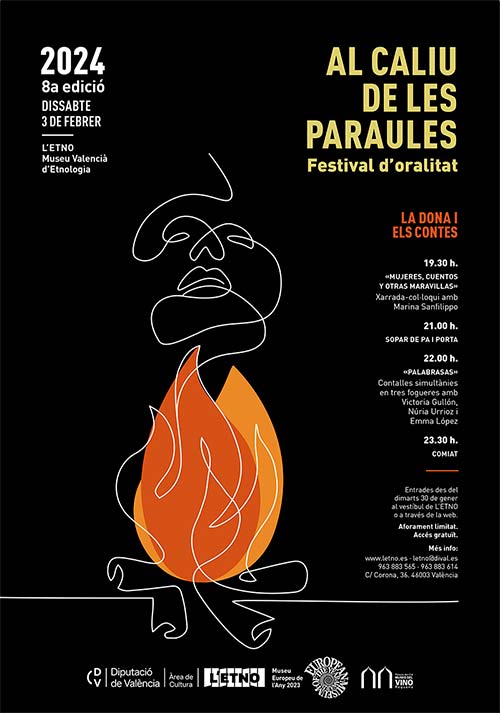
From AL CALIU DE LES PARAULES we will pay special attention to the role that women have played in the creation of tales and stories. We will do so with Marina Sanfilippo, an expert in artistic and popular orality, and with Victoria Gullón, Nuria Urrioz and Emma López, three great storytellers who in this eighth edition will accompany us to enjoy stories, romances and songs in the heat of the bonfires, and of course, of words, the living memory of the oral tradition. And they have done so on the domestic stage, accompanying the tasks of caring for, feeding and entertaining their loved ones, with the word told and sung, recreating the word-caress, or the word that provokes curiosity and restlessness.
They have also done so, outside the home, by conversing or encouraging collective agricultural and livestock tasks. There were many propitious moments throughout the day to allow the living word to be spoken, together with the gaze that crosses centuries and plunges into distant lands. It was so common for women to tell stories that the expression "old wives' tales" was coined.
But women have not limited themselves to telling stories in the intimacy of the home or in the workplace. They have been and are the undisputed protagonists of the survival and revitalisation of the spoken word in all areas of life. Thanks to them, this art, this treasure, this craft of storytelling remains alive.

PROGRAMME
Saturday, 3rd February
19.30 h. "Women, stories and other wonders".
Talk-colloquium with Marina Sanfilippo, coordinator of the Permanent Seminar on Literature and Women at the Faculty of Philology of the UNED and member of the Chair of European Intangible Cultural Heritage (University of Valladolid).
21.00 h. Dinner of "sobaquillo"
Dinner at three bonfires with riddles and toasts.
"sobaquillo" means that participants should bring their own supper and the organisation will provide the snacks and drinks.
22.00 h. "Palabrasas" (Words)
Simultaneous storytelling at three bonfires.
23.30 h. Farewell
Joint celebration with dancing and singing.
Storytellers:
Victoria Gullón (romances), Nuria Urrioz and Emma López.
Idea, project and coordination:
Vicente Cortés -Vividor del cuento.
Limited seating. Free admission with ticket. Collection from Tuesday 30 January 2024 (maximum 2 tickets per person) in the foyer of L'ETNO (from 10 a.m. to 8 p.m.) or via this website.
Important note: before booking tickets through the online ticket platform you must register if you are not already a user.
Actividad demo
L’ETNO, Museu Valencià d'Etnologia, es una institución cuya misión es coleccionar, investigar y difundir todo aquello relacionado con la cultura tradicional y popular valenciana. Como sucede en todas las culturas, el pueblo valenciano se enfrenta a un futuro identitario indefinido, en debate permanente entre un mundo culturalmente cada vez más homogéneo y el deseo de mantener las costumbres y prácticas que consideran propias y que les arraigan a un territorio y a una colectividad.
Todas las identidades culturales, también la tuya, están sujetas a contradicciones, a tensiones y a falta de unanimidad. Mientras hay personas que las ven como un hecho positivo, otras las detestan; mientras unas solo defienden la suya, con postulados excluyentes, otras prefieren la multiculturalidad. Lo que parece claro es que, lejos de ser una cuestión cerrada, la identidad cultural está en continua evolución, en un diálogo constante entre las diferentes sensibilidades presentes en la sociedad.
En nuestras salas permanentes os proponemos reflexionar sobre estas cuestiones, enmarcándolas en la sociedad valenciana desde el final del mundo preindustrial hasta hoy. La exposición se organiza en tres ámbitos, y en cada uno de ellos se aborda un tema: la Ciudad, donde se plantean cuestiones relacionadas con la tensión entre lo global y lo local; la Huerta y el Marjal, en los que se consideran algunos estereotipos relacionados con la cultura valenciana, y Secano y Montaña, donde se hace referencia a aspectos poco conocidos de las tierras del interior valenciano.
Cuerpo del texto del campo extra. En este espacio se puede poner cualquier dato de interés como el precio de la actividad o información que no aparezca reflejada en el resto de campos.
La ciutat que parla. Taller d’art urbà
Tallers per famílies en caps de setmana lAJSDKÑasdjkñlASDJ ñaksjdalsdj ÁPSDL´pasdi´PASD ápisdo´PAS ápsodiÁPSDOI ápsldiÁPSDIpasdio
dalkasdfjlk laljfuj
Façanes de Ciutat Vella
Tallers per famílies en caps de setmana
Castanyoles gegants
Tallers per famílies en caps de setmana
Family Workshops 2021 (jan-jun)
Guia didactica para escuelas
Espanta la por llega a las Escuelas!
Propuesta dirigida a alumnos y profesores en la que se trabajan los personajes tradicionales del miedo en todos los cursos de infantil y primaria, y en todas las áreas de conocimiento.
Reivindicamos nuestros monstruos para descubrir el mundo mágico de las fábulas con las brujas y los dragones, para engancharlos a la lectura con el Caro y Queixalets, para desarrollar su imaginación con manchas de pintura que parecen lo que no son, para cantar, para la risa, para jugar, para bailar… para disfrutar del miedo y así ayudarlos a disfrutar de la vida.
Etnomusic 2020
L'ETNO, Museu Valencià d'Etnologia organizes the ETNOMUSIC 2020 Festival with six concerts of Valencian and world music.